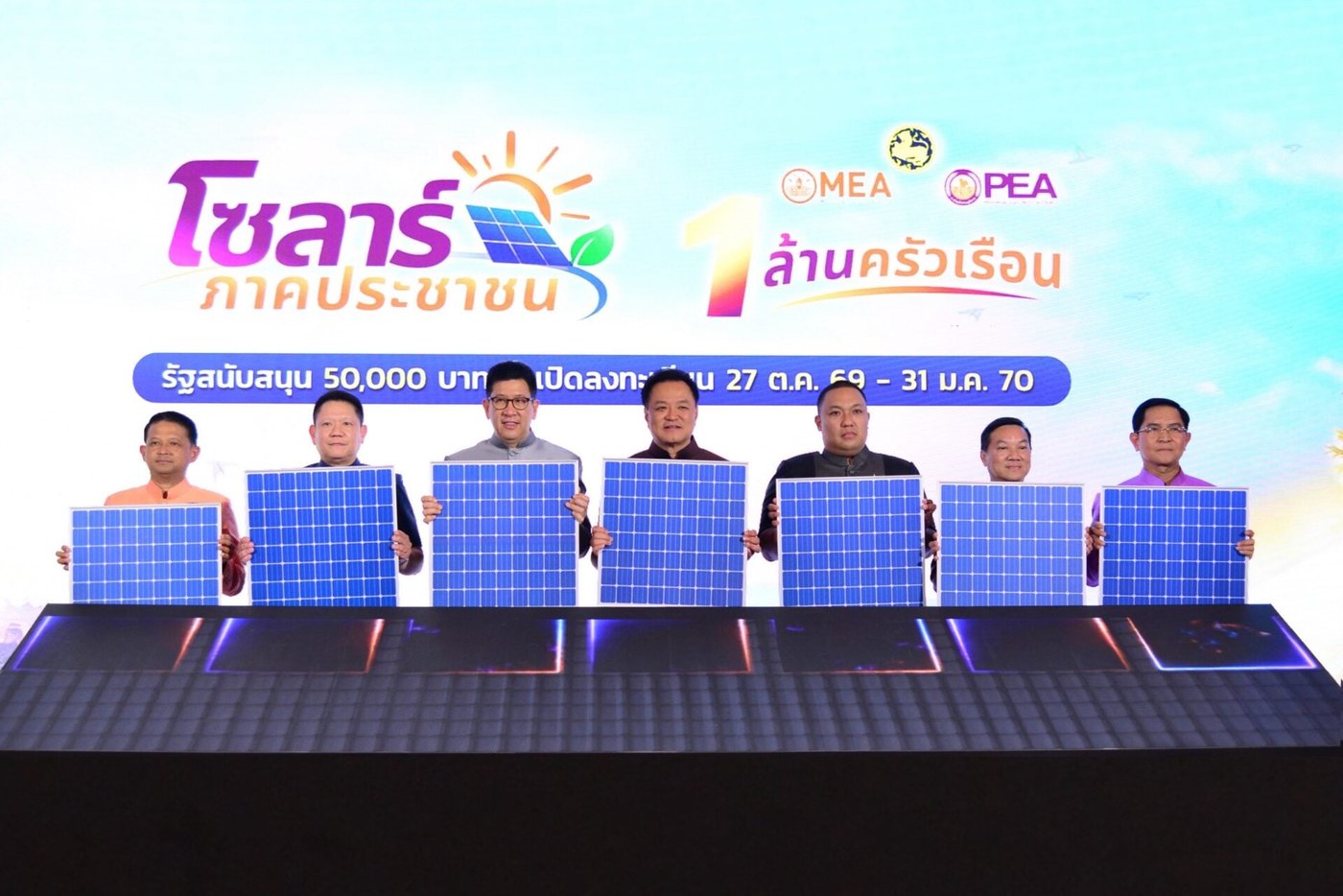
This one's real. Prime Minister Anutin Charnvirakul launched the People's Solar program on 27 October with a target of one million homes and a subsidy of ฿50,000 (about ₱94,000) each. A ฿50 billion (₱94 billion) budget covers exactly that, so the headline sums work. The Nation, TaiyangNews and Pattaya Mail all carry the same details, and the MEA and PEA, Thailand's two state power distributors, are running it. Registration closes on 31 January 2027, with one entitlement per electricity meter.
How the deal works. The standard 5-kilowatt package is capped at ฿140,000 (₱264,000). The subsidy brings that down to ฿90,000 (₱170,000), and three state banks will lend it at 2.5% over seven years, with instalments collected on the power bill. Spare power sells back at ฿2.20 (₱4.15) a unit, and systems don't have to go on a roof: ground-mounted and floating setups count too.
Who it actually suits. The Finance Ministry says homes paying ฿3,500 to ฿4,000 (₱6,600 to ₱7,550) a month or more, and that for lower bills the investment may not be worthwhile. Its example home pays ฿4,000, saves about ฿1,150 by using 40% of the solar output, and earns just over ฿700 selling the rest. Take out the ฿1,100 loan instalment and it's about ฿700 (₱1,320) a month ahead. That adds up as far as it goes.
Where the numbers run a bit warm. Selling ฿700 worth at ฿2.20 means about 320 units sold, so about 210 used at home. Saving ฿1,150 on those works out near ฿5.40 a unit, against an average Thai tariff of ฿3.95 before VAT. Heavy users pay above the average, so that's no fudge, but it's a generous example. The ฿24.5 billion (₱46 billion) annual saving the government quotes also comes to ฿24,500 a home, a little above that same example's roughly ฿21,600. The ministry itself admits output can't be guaranteed because it depends on the weather.
What to watch. Installers. They have to put up bank guarantees of ฿50,000 and ฿10,000 per job and carry seven years of warranty, insurance and maintenance. The Nation reports WAY SOLAR has ruled itself out and Comsys Solar will cap its work at 20 homes if the draft conditions stay. Finance Ministry permanent secretary Lavaron Sangsnit says there are enough registered installers. A subsidy only helps if someone turns up to bolt the panels on.