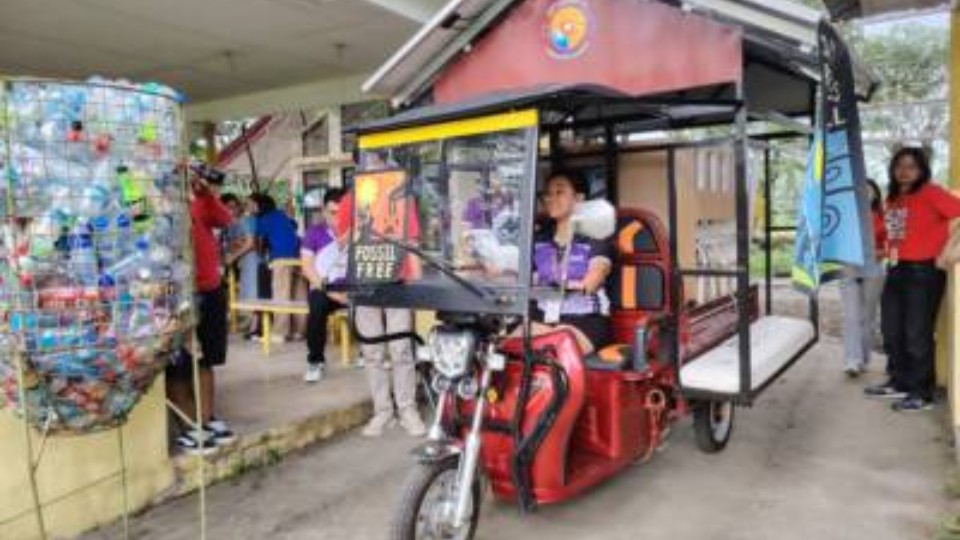
In December 2025, on the 6th, 350 Pilipinas, the Polytechnic University of the Philippines Institute of Technology and its Electrical Engineering Technology students launched a mobile solar charging station called Watt-A-Ride at the PUP Sta. Maria campus in Bulacan. It's pitched as a community-owned unit that can be moved around campus or taken out during emergencies, with solar panels and charging ports on board. That much is on the record from two reports, though they read as one source, because the Power Philippines story carries the same launch details as the 350 Pilipinas release.
What's real. The launch is dated and named, and it sits inside a longer run of work. A 350 Pilipinas page from May 2025 describes a meeting with the campus director, Dr. Arman DC. Santos, when the idea was still a proposal. The group's earlier fixed station at PUP's Institute of Technology in Sta. Mesa, Manila, was inaugurated on 14 May 2024, and the group says it had since put in two fixed stations. The twist at Sta. Maria is the mobile part: the release says electric vehicles are what move it. The launch photo shows a red electric trike with a covered cab and a flat tray behind it, but we can't see panels or ports in it, so we can't say what was on board.
What nobody's published. No panel wattage. No battery size. No number of charging ports. No cost in pesos, no count of students on the build, and no test or usage figures. Those gaps matter, because the pitch is power when the grid fails. Phone charging is easy for even a small panel. "Small essential equipment" and use through a typhoon or a long blackout depend on how much battery it carries, and that's the number we don't have. For a rough guide only, the fixed Sta. Mesa station was reported at up to 10 devices at a time, with 40 minutes of charging and then a 5-minute rest. That's a different unit, and we shouldn't assume the mobile one matches it.
What's happened since. We looked for an update and couldn't find one. The newest page we read was last edited on 10 December 2025, so we can't tell you whether Watt-A-Ride has been used in a storm, how many people have charged on it, or whether the campus has kept it running. The claims about emergency power are the organisers' own intentions, and nothing yet shows them being tested.
Our read. It's a good-looking small project, and the community-owned idea is the interesting bit: students and a campaign group building their own power, with no commercial seller behind it. It checks out as a real launch. Whether it works as an emergency power source stays unproven until someone publishes the panel size, the battery and a run time.