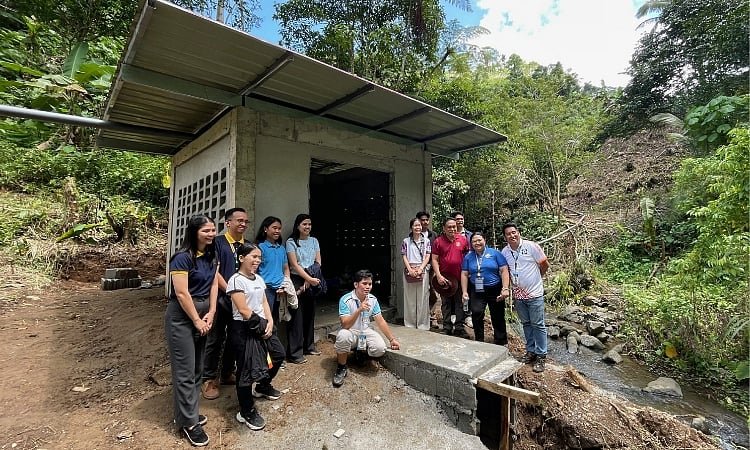
The claim comes from the Department of Science and Technology. Its Microgridterprises program says an ₱8-million micro-hydro plant on the water from Awao Falls can make 10 to 15 kilowatts, enough for around 100 households in Purok 5, Barangay Awao, plus the school and clinic. It's a government community project, not a commercial one, and the wider program checks out: the University of Southeastern Philippines signed on with DOST Region 11 in July 2024, and the Manila Times reported that agreement at the time.
Built isn't the same as running. The Philippine Information Agency report carried by SunStar on 29 October shows the powerhouse standing, but it still says the plant will supply power "once operational". No start date is given. For now, homes get by on small solar lighting kits from an earlier housing program. Preparations began back in 2023, and the 2024 university agreement described a two-year collaboration, so this one's taken a while.
The 100-household figure is a tight squeeze. Divide 10 to 15 kilowatts by 100 homes and each gets 100 to 150 watts, with the school and clinic still to come out of the same pot. That's lights, a fan and phone charging. A single electric rice cooker draws several times that. The DOST is also handing over ₱1 million worth of processing gear, including a wood chipper, dryer and pelletiser, and neither report we read says how much power those machines need or whether they'd run at separate times to the houses.
What hasn't been tested. The report promises a "continuous flow" of electricity, but no stream-flow or dry-season figures have been published, and that matters with the DOE already preparing the power sector for El Niño. On the DOST's own numbers the plant comes to ₱80,000 a household. We found no published test results, and the figures come from one government report, so they haven't been independently measured.
What to watch. The people who'd have to keep it going are the roughly 150 members of the Purok 5 Awao Farmers Association, with the university and Davao de Oro State College promising help with maintenance. If this works, it'll be because a village can run its own small power plant and sell what it makes to pay for it. No buyer has been named yet.