The claim comes from Far Eastern University. It says its Manila campus has completed a shift to 100% renewable electricity, covering "all eligible power accounts", with the Manila gymnasium the last one to be added. Power Philippines reported it on 23 October, working from an FEU press release. That's the only report we found, so this is FEU's own account and nothing here has been independently audited.
What "100%" means here. The shift runs through the DOE's Green Energy Option Program, which lets big power users pick a renewable supplier. FEU says it started buying open-access supply in 2017 at 1,300 kilowatts from First Gen, and had 2,550 kilowatts across the FEU Group by 2024. That's a contract. The power still reaches the campus down the same grid wires as everyone else's, so the match between what FEU buys and what it uses happens on paper, not in the cables. That's a legitimate way to go renewable, and it's how most big users do it. It's just not the same as running off your own panels.
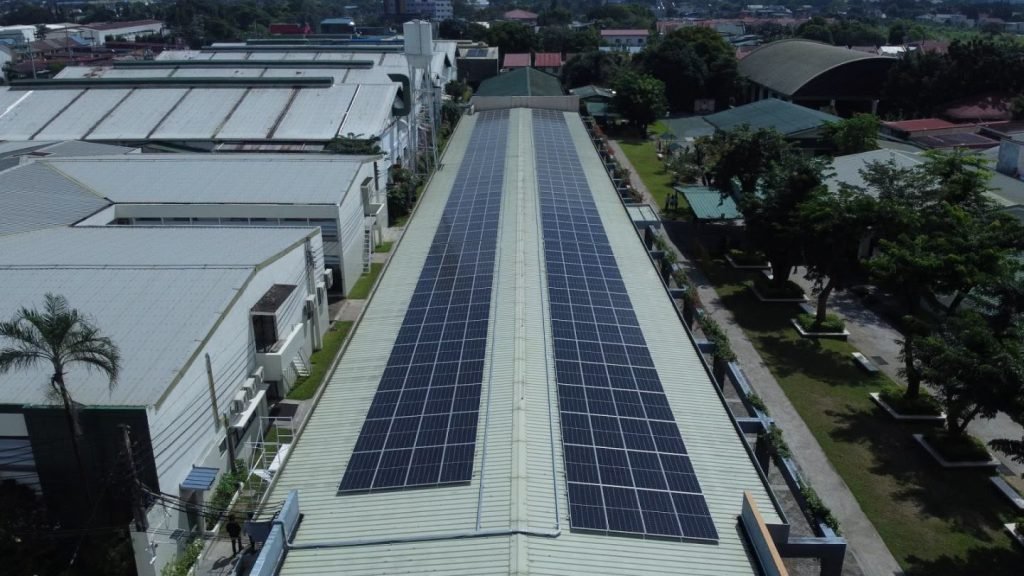
The campus's own panels are the small part. FEU says its installed solar grew 369.37% in 2024 to 468.9 kilowatt-peak. Set that against the 2,550 kilowatts of bought supply and the panels are roughly a fifth in raw size, if both figures cover the same group, which the report doesn't spell out. That's our arithmetic, not FEU's. Panels also only produce in daylight, so their share of the actual energy used is probably lower again.
What hasn't been shown. The headline says 100%, but the reported scope is "eligible" accounts at the Manila campus. FEU's own earlier figure for the whole group was 98.3% in April 2025, and it says FEU Alabang hit 100% in December 2024, four years ahead of its 2028 target. We found no published kilowatt-hours used, no third-party certificate, and no bill savings, and the report links no FEU release. A university that reached this on a supply deal rather than a rooftop gamble has still done something real. It's just a smaller claim than the headline sounds.
What to watch. The useful next step is numbers: total campus kilowatt-hours, how many came from the supplier and how many from the roof, and who verifies the renewable label. Until then, call it a verified switch of supplier, not proof the campus makes its own power.