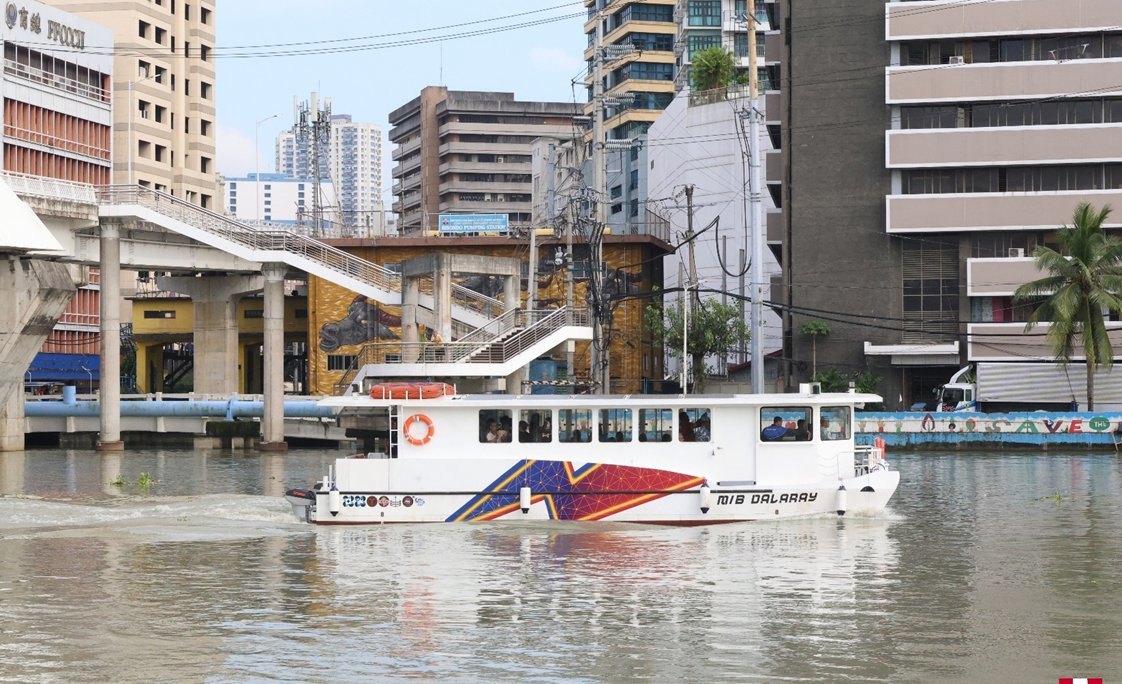
This one isn't brand new. The M/B Dalaray was inaugurated on 6 October 2025 at Plaza Mexico in Intramuros, and we're checking it now because it's the best-documented homegrown e-boat in the country. The claim is that Filipino engineers built a battery-electric ferry for Pasig River commuters. UP Diliman's Electrical and Electronics Engineering Institute built it for DOST-PCIEERD, with the MMDA and the Maritime Industry Authority, and the university's own write-up says it seats up to 40 passengers plus five crew.
What checks out. The boat is real and has been seen carrying passengers. The university's photo shows it under way with people on board. The published specs agree across the university, Gulf News and CleanTechnica: two 50-kilowatt electric motors, a 160-kilowatt-hour lithium-ion battery, a cruising speed of 8 knots, and the build done at a Navotas shipyard. A CleanTechnica report from 18 July 2026 says it's now running between Guadalupe and Escolta, which is the only post-launch status update we could find.
The 45-kilometre range is the builders' number. UP says the battery can carry it more than 45 kilometres at 8 knots. Our own sums say that's believable: 8 knots is about 15 kilometres an hour, so 45 kilometres is roughly three hours, and 160 kilowatt-hours over three hours is about 53 kilowatts on average, around half what the two motors can draw flat out. Think of a diesel truck rated at 300 horsepower cruising on half throttle. That's the maths, though, not a measurement. No independent range test has been published, nothing says how the figure holds up with a full load against the Pasig's current, and the battery usually won't be run flat anyway.
What nobody has published. We found no fares, no ridership counts, no uptime record and no running costs. Gulf News said it was built for under US$1 million, with no peso breakdown, and credited it with five-fold fuel and maintenance savings and a four-year payback, but gave no source for any of it. The line that it's the first electric passenger ferry designed and made entirely in the country is CleanTechnica's wording, not an official statement. The reports also disagree on the little things: Gulf News names a different agency as the operator to the MMDA, and CleanTechnica calls the river chargers permanent where the university called its inauguration charger temporary.
What to watch. This is a pilot, and the real test is a year of ordinary days: how often it sails, what it costs to charge at three river stations (Escolta, Guadalupe and Napindan, per the university), and whether a second boat gets built. If the DOST publishes its pilot data, we'll check it. Until then it's a solid student-and-engineer build with a plausible range figure that's yet to be measured in public.