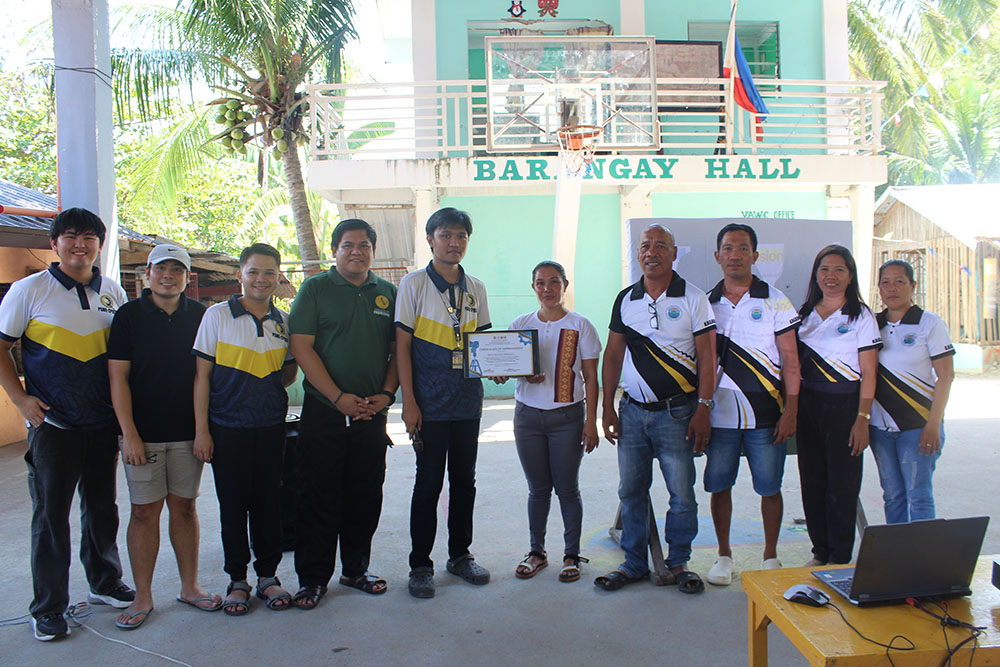
On 15 May 2026, members of the Central Philippine University chapter of the Philippine Society of Mechanical Engineers took a wind turbine design to Barangay Botlog in Concepcion, Iloilo. It's a small student-and-faculty outreach, not a commercial project, and CPU described it in a write-up posted on 5 June 2026. That write-up is the only report we found.
What happened. The program was titled "Two-Stage Savonius Vertical Axis Wind Turbine Shaft Design Validation and Community Learning Engagement Program." Faculty and student volunteers, led by outreach coordinator Engr. Kleio S. Tobias, presented a proposed shaft design and ran sessions on wind energy basics, how vertical-axis turbines work, and what to think about on an island. The Concepcion local government helped coordinate it, with Barangay Captain Mavic L. Onday supporting. CPU calls Botlog an off-grid island community, but the write-up doesn't say what power the barangay has now.
The claim. CPU says the program gave the community "technical validation" and showed the design is viable for off-grid island conditions. A Savonius turbine is the simple type with scoops that catch the wind and spin on an upright shaft, a bit like a cut-open drum. They're slow but cheap, and they don't need to face the wind. This one is about the shaft, the part that carries the load, so it's a sound thing for engineers to check.
What hasn't been tested. The write-up gives no turbine rating, no wind speeds at Botlog, no cost, no attendance count and no test data. Nothing in it says a turbine has been built or installed on the island. "Validation" here reads as the design being presented and explained, not a measured result. The university does have real kit behind the effort: its DOST-PCIEERD wind energy R&D facility, opened in May 2022 and billed by CPU as the country's first, includes a wind tunnel. We couldn't find any published test results from it for this design.
What to watch. We found no update since the June post, so the honest status is a design and a conversation, not a power supply. The next steps worth waiting for are a built prototype, wind measurements on the island, and a published output figure. Until then it's a promising student project from a university that has the tools to test it properly, and a village that now knows what's being proposed.