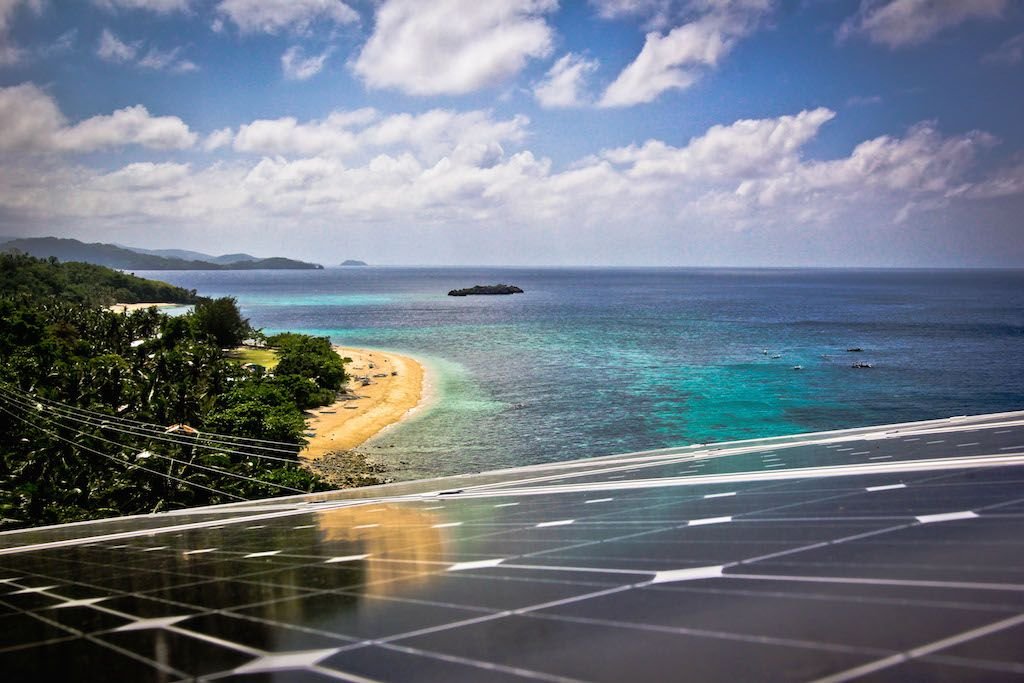
The claim comes out of the COP31 climate talks in Türkiye. On 10 November the Philippines joined Indonesia and Vietnam in a partnership to move island and remote communities off diesel and onto solar with batteries, and Power Philippines reported on 13 November that the DOE wants to fold island electrification into its Green Energy Auction. Cobrador Island, a marble-carving community in Romblon, is the example it points to. The system there isn't new. It was switched on in March 2016, so this is a ten-year-old project getting fresh attention, and it's the only island example the report gives.
The round-the-clock power checks out. The Asian Development Bank's launch release describes a 30-kilowatt solar array, 180 kilowatt-hours of lithium-ion batteries and a 15-kilowatt diesel generator that kicks in when the sun and battery run out. It serves all 244 households, plus the health centre and school, and ADB's own project page says it gave the Romblon Electric Cooperative 24/7 supply where diesel alone could only serve 110 households for 8 hours a day. A GIZ field visit in April 2026 found the island "now enjoys continuous power". That's two sources, ten years apart, saying the same thing.
The saving is the soft spot. The new reporting says the hybrid cut generation costs by about half. The only firm source we found is that same GIZ page, which says the price is 50% cheaper than the old diesel rate. ADB's pages say only that costs fell, with no figure. Power Philippines also gives dollar-per-unit figures for before and after, but doesn't say who measured them, and we couldn't trace them to a published report. Nobody we found has published the fuel bill, the tariff or the battery replacement cost. Think of it like a work ute: "it does 50% better on fuel" means little until someone shows the odometer and the receipts.
Small differences in the record. GIZ says the island used to get 6 hours of power a day. ADB says 8. Both are "a few hours" on diesel alone, so it doesn't change the picture, but it shows how loosely these figures get repeated. GIZ also says plans were in place to grow the array to 75 kilowatts and add a 180 to 200 kilowatt-hour battery "within the year". We couldn't find a report saying that's been done, so the 30 kilowatt figure may already be out of date.
What it means for the wider push. The DOE data cited in the report says 421 of the country's 447 off-grid power plants ran on oil as of December 2025, so the target is huge. One small island that's kept the lights on for ten years is a good sign, not a national proof. The partnership hasn't named an auction round, capacity or timeline yet, and the report gives no peso figures. It's an announcement, not a build.