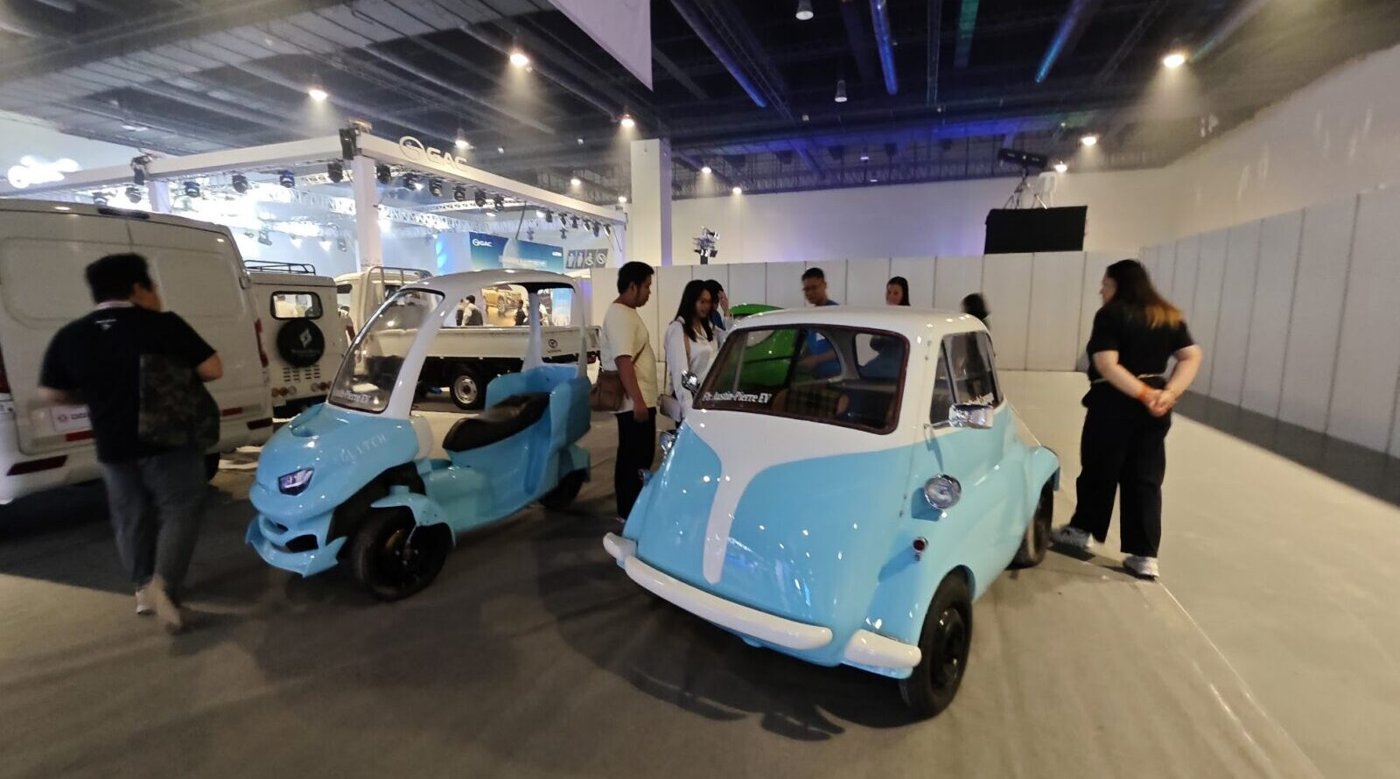
In April 2026, CleanTechnica ran a profile of Adonis Lagangan, a Filipino mechanical engineer who runs a small startup called Austin-Pierre Motor Vehicle Manufacturing. He's building an Isetta-style electric microcar called the e-Setta and a three-wheeler called the Genie E-Trike, and he says they're designed for Philippine roads and Philippine conditions. It's a small, self-funded effort, not a commercial rollout, and this story is from the files, so it's seven months old.
What checks out. The vehicles are real. The reporter's own photos show an Isetta-style fibreglass body and a trike on a show floor, and Lagangan himself describes the Genie E-Trike as completed in a January 2026 column for the Daily Tribune, with three running prototypes built in Indonesia. He has form, too. A 2016 Power Philippines report covered his earlier Genius EV, a five-seat electric mini-sedan from his Clima Mobility firm, with a stated 10 kW motor, a 75 km/h top speed and a 60 to 70 km range. That was the maker's own spec sheet.
What hasn't been tested. The new vehicles come with no published battery size, range, top speed or price, and no independent test results. Lagangan's main pitch is that imports often use lead-acid batteries while his are built for durability and local servicing. That's a fair question to ask of cheap imports, but nothing published backs up his side of the comparison yet. One photo caption mentions a "10W" direct-drive motor with a battery bank recycled from solar batteries. A vehicle needs kilowatts, so that looks like a slip, but the article doesn't say which vehicle it means or what the real figure is. The piece also says his earlier work was on the shell of the Keating TKR supercar and gives its top speed as over 400 km/h. That's the article's figure, and we haven't checked it.
The money problem. Lagangan says the prototypes were self-funded and that scaling to a proper production line needs grants or institutional support, which he says mostly go to bigger players. The Tribune column asks for the same. Neither piece names an investor, an order book or a registration or road-approval status, so there's no sign yet of customers or paperwork.
What to watch. I couldn't find any update since April. If he wants this taken seriously, the useful next steps are simple: publish the battery type and size, put a real range and top speed on paper, and get a vehicle independently tested and registered. A backyard builder doesn't need a factory to do that. A trike that survives a month of real daily running would say more than any show-floor photo.