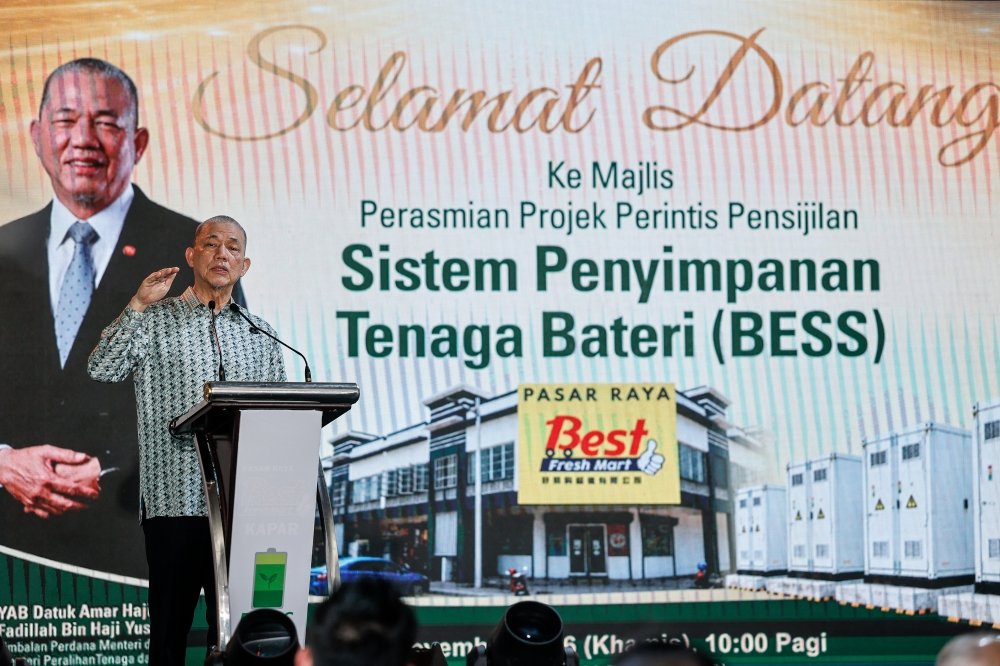
On 12 November 2026, Deputy Prime Minister and Energy Transition and Water Transformation Minister Fadillah Yusof launched a battery energy storage system (BESS) certification pilot run by BESSC Sdn Bhd, at the Best Fresh Mart supermarket grounds in Kapar, Klang. Bernama, Malay Mail and The Vibes all reported it that day with matching details. So the launch checks out.
Why it matters. Big batteries are coming. The MyBEST tender covers 400 MW and 1,600 MWh of storage, and the sixth Large Scale Solar round (LSS6) requires batteries totalling 1,250 MW and 5,000 MWh. Add those up and it's about 6,600 MWh, mostly four-hour systems. The minister warned that a failed system can go into thermal runaway and catch fire, and said safety can't be left until later.
What the scheme is, and isn't. It's voluntary. It sits on top of the Energy Commission's existing BESS safety guidelines, published in May 2026, rather than replacing them. The minister asked the Energy Commission and the Standards Department to help BESSC's application along, and to build Malaysian standards that could be used across the region. Think of it like a roadworthy that you can choose to get: useful, but only if people actually book in.
What we couldn't find. None of the reports say how big the Kapar battery is, what's being tested, who signs off the results, or what certification costs. The minister also said Malaysia's installed renewable capacity is close to 14 GW, with a target of 35 percent of generating capacity by 2030 and 70 percent by 2050. That 14 GW figure is the ministry's own and we didn't find an independent count to set beside it.
Verdict. Verified that the pilot launched and the battery tender sizes are as stated. The open question is how many battery owners sign up for a scheme they don't have to join.