Zijin Longking, the equipment-making arm of Chinese mining giant Zijin Mining, says it's bringing a battery-electric haul truck to Australia for testing in December, and says its electric trucks already running in China are cutting energy costs by "nearly 80%" compared with diesel. The Australia plan is real and backed by multiple independent sources. The 80% cost claim doesn't line up with the company's own numbers from two months earlier.
The Australia plan checks out. Industry trade title International Mining, a long-running outlet that covers mining equipment on the record, reports that Zijin Longking Australia, a new Perth-based arm of the company headed by executive director Luke Matias, plans to bring a ZL150E electric haul truck (150-tonne payload) to Australia in December 2026 for on-site demonstration testing, covering the truck, its battery and its battery-swapping system, alongside compliance checks against Australian Standards. The company is a major sponsor and exhibitor at the IMARC mining conference in Sydney this year, and names Australia as a priority market alongside South America and Africa. None of that is unusual for a Chinese equipment maker chasing a foothold in the Pilbara and other big mining regions, and nothing about the plan looks exaggerated.
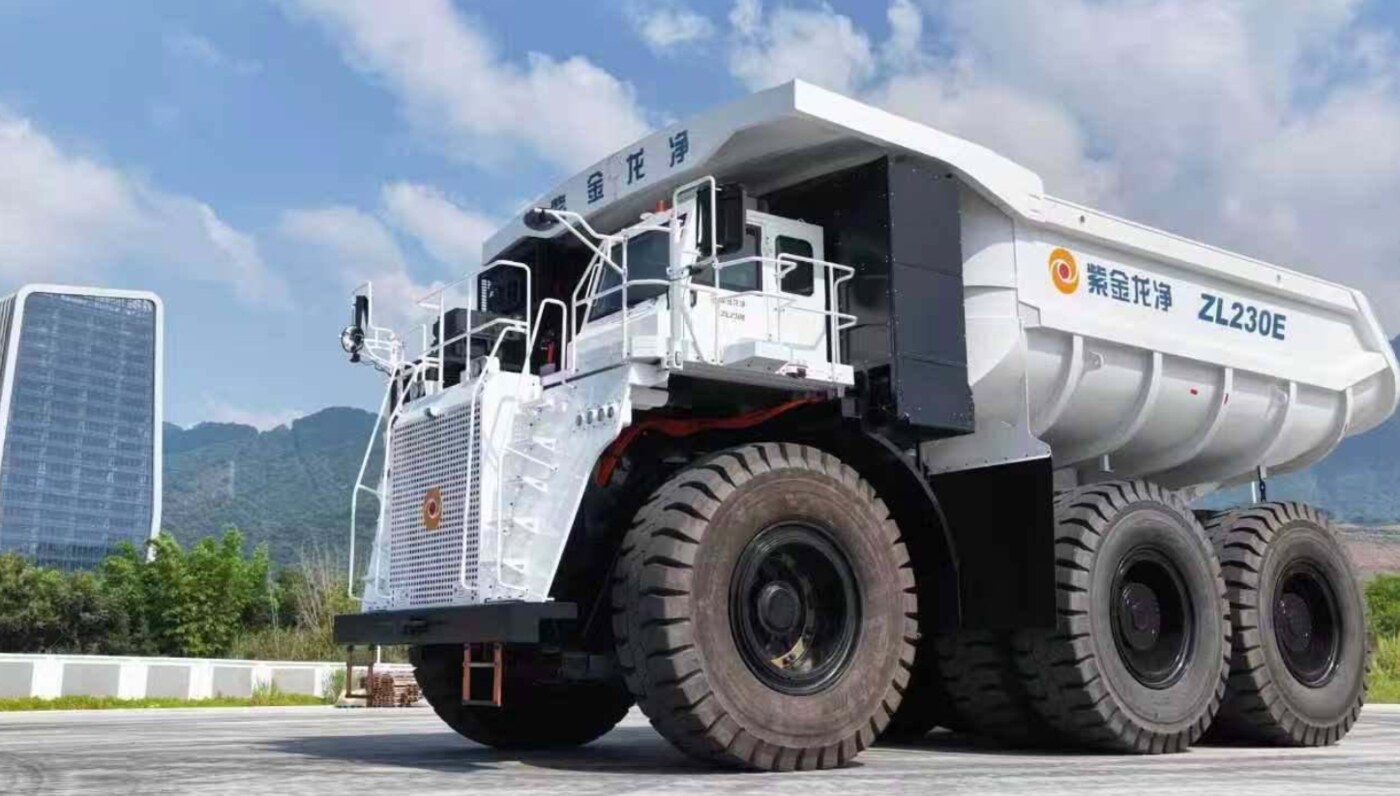
The trucks themselves are real and independently confirmed. Zijin Longking's bigger sibling truck, the 230-tonne ZL230E, was unveiled in August 2026 and covered independently by electrive.com and The Driven, among others, which reported a roughly 1,400 kWh battery pack and a 10-90% charge time of about 25 minutes. The same model is pictured here at the company's Longyan headquarters. The Australian test truck is the smaller 150-tonne ZL150E, of which the company says 41 units are already running in Chinese mines, mostly at Zijin's own Julong Copper Mine in Tibet.
The 80% figure is the problem. In its October interview with International Mining, Zijin Longking said its electric trucks have "availability above 90%," haul more than 3,000 tonnes a day per truck, and that "energy costs have been nearly 80% lower than those of conventional diesel mining trucks." But when electrive.com covered the related 140-tonne electric truck at the same Julong mine back in August, it reported Zijin's own figures as a cost-per-tonne-kilometre about 29% lower than diesel equivalents, and a separate claim of 17% less energy used than comparable diesel trucks, alongside the same "over 90% availability" and a lower daily haulage figure of "more than 2,000 tonnes." Nothing published since then explains how a 17-29% saving in August became an 80% saving in October for what appears to be the same fleet at the same mine. No methodology, fuel price assumption or maintenance breakdown is given for either number, which is the gap that matters here: it's the kind of jump that should come with workings shown, and it doesn't.
The bottom line: treat this as two separate claims. That Zijin Longking is a real, large manufacturer sending a genuine electric mining truck to Australia for testing in December is well supported and checks out. That its trucks now save "nearly 80%" on energy costs compared with diesel is the company's own unsupported figure, inconsistent with what the same company said about a similar truck at the same mine two months earlier, and should be read as marketing until Zijin publishes the numbers behind it.