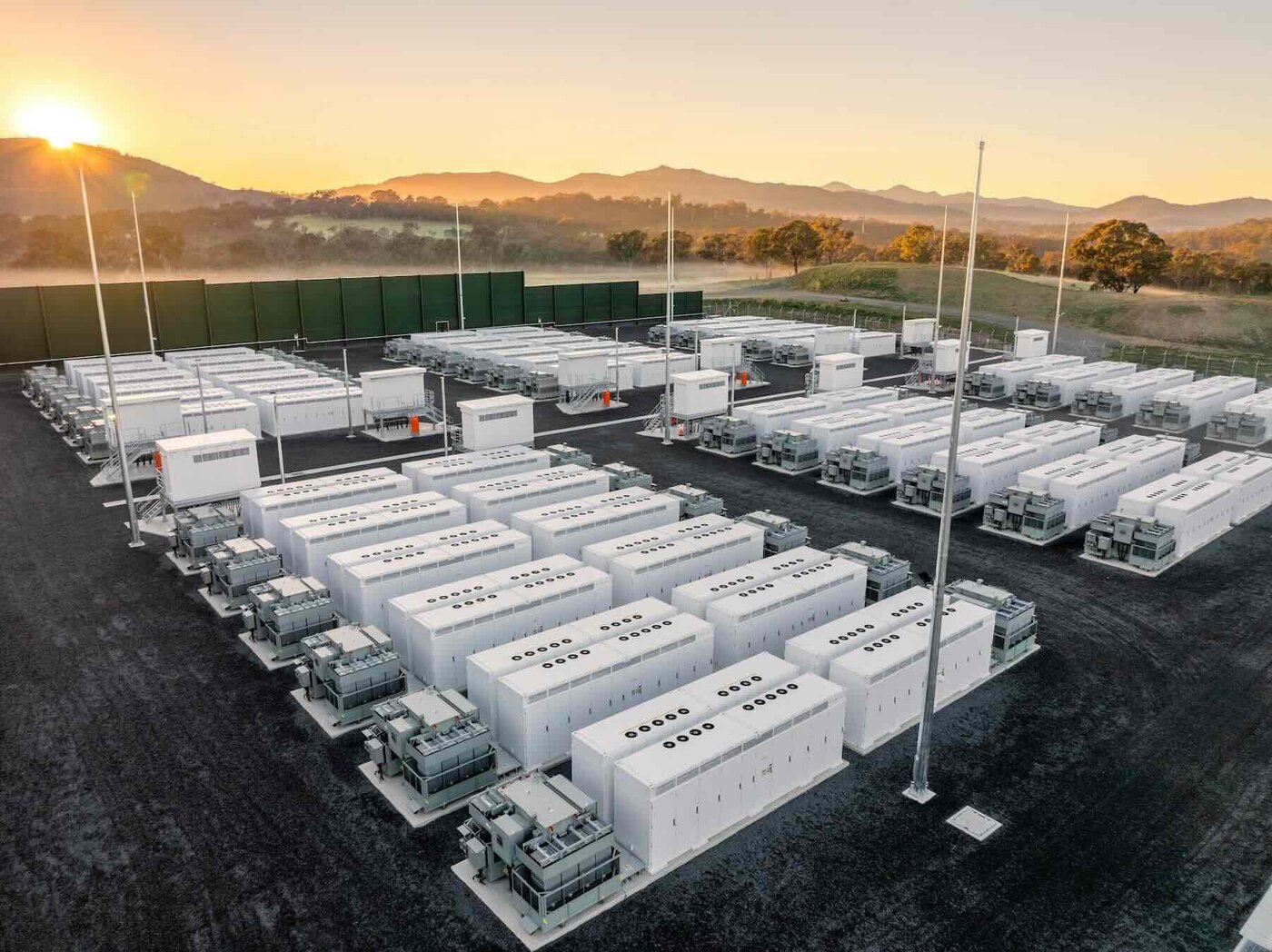
The ACT government held a ceremony this week to mark the "Big Canberra Battery" at Williamsdale coming online, with Chief Minister Andrew Barr telling the crowd it was "a major piece of that future-proofing" for the territory's net zero plans. That sort of line, from a politician at a ribbon-cutting, is exactly the kind of claim this desk exists to check. In this case, most of it holds up.
The scale is real. The Williamsdale Battery Energy Storage System is rated at 250 megawatts and 500 megawatt-hours, built from Tesla Megapack 2 XL units, a fact Eku Energy itself confirms rather than something reported secondhand. The ACT government and Eku both say it can supply roughly a third of Canberra's peak demand for two hours. It is, as both the ACT and Eku say, the largest battery ever built in the territory. It is not, and nobody involved has actually claimed it is, the largest battery in Australia: bigger grid batteries already operate elsewhere in the country, so "Canberra's biggest" should be read as exactly that and not stretched further.
The timeline and ownership check out too. Eku, a battery developer launched by Macquarie's Green Investment Group, reached financial close on the project in November 2024, broke ground later that month, and says it entered commissioning in mid-2026 before switching on around the ceremony this week. The battery is owned and operated by Eku, not the ACT government, under a 15-year contract that pays Eku fixed quarterly payments in exchange for a share of the revenue it earns trading in the market. One report puts that revenue share at 50 percent, a figure we could not independently confirm from Eku or the ACT's own materials, so treat that specific number as unconfirmed rather than settled. The project's cost has also been quoted both as "$300 to $400 million" in Eku's own 2023 release and as a $100 million ACT budget allocation in 2020-21, which looks less like a blowout and more like an early funding pledge being overtaken by the fully costed build that followed.
Where it gets softer is the word "grid-forming". When Eku reached financial close back in 2024, the trade outlet energy-storage.news reported that Eku had confirmed the battery would operate in grid-forming mode, a more sophisticated capability than an ordinary battery that just follows the grid's existing signal, and one that matters for keeping the system stable as coal and gas plants retire. Neither Eku's commissioning announcement this week nor the ACT government's own project page uses that phrase. Both describe only general fast frequency response services. Batteries don't typically lose a grid-forming capability once it's built in, so there's no reason to assume the claim is wrong, but it also hasn't been restated by anyone at the point the battery actually started operating, two years after it was first mentioned.
The bottom line: the Big Canberra Battery is real, it's running, and it genuinely is the biggest battery the ACT has built. The "grid-forming" claim and the 50 percent revenue-share figure are the two details doing the rounds that rest on older or unconfirmed reporting rather than anything said this week, which is enough to call this one partly true rather than a clean pass.