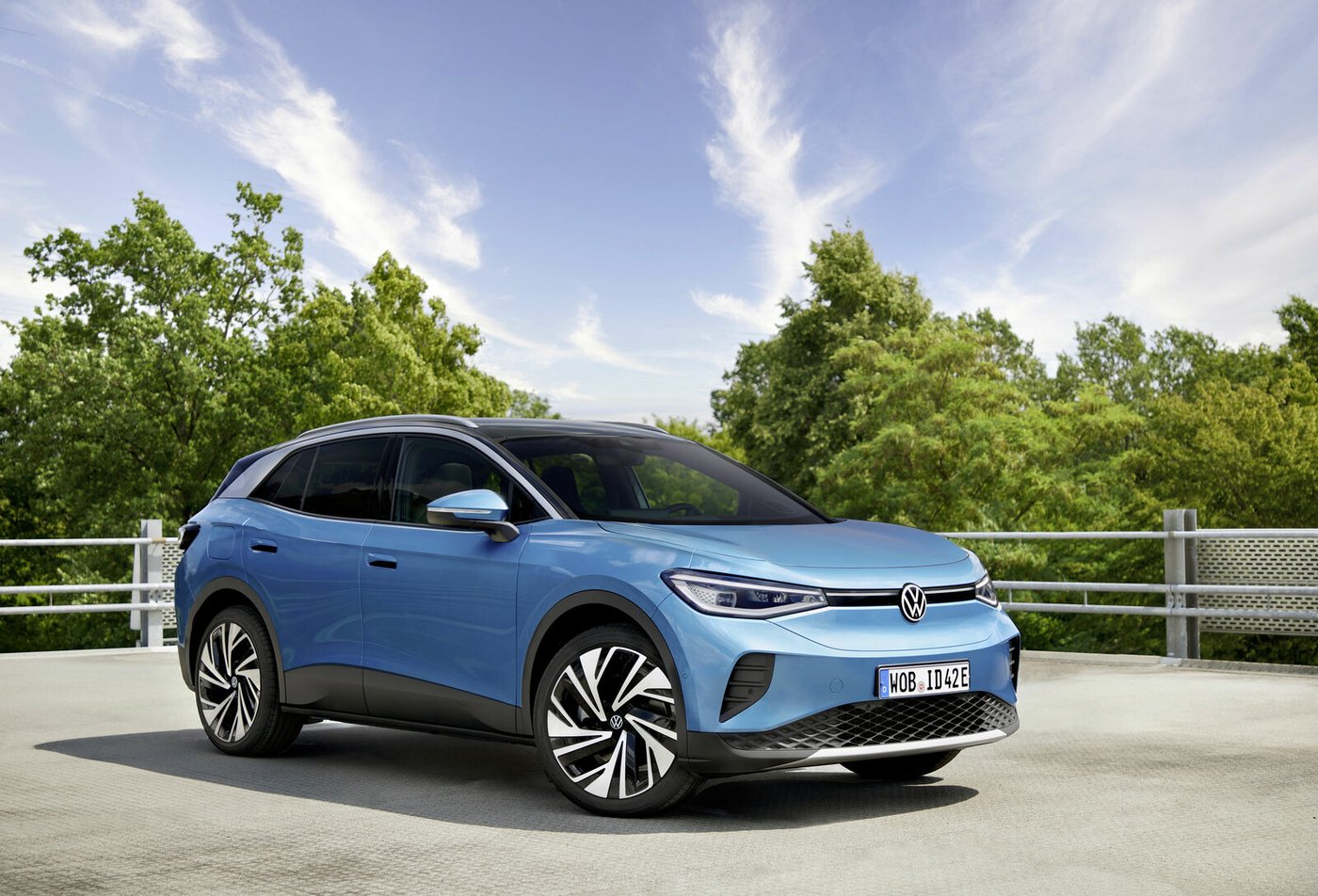
The line doing the rounds this week is that Volkswagen has "fixed" its latest ID.4 fire risk by remotely capping how far the battery can charge. That's not wrong exactly, Volkswagen's own paperwork backs the cap up as a real safeguard, but it skips the part that actually matters: nobody at Volkswagen can yet say what's causing the problem in the first place.
What's being recalled. Volkswagen Group of America filed recall campaign 26V630 with the National Highway Traffic Safety Administration on 30 September 2026, covering 22,524 model year 2023 to 2026 ID.4 electric SUVs built between 1 January 2023 and 1 February 2025. The concern is the high-voltage battery, supplied by SK Battery America: under "certain charging profiles" combined with a state of charge above 80%, the battery may undergo thermal propagation, in plain terms, a fire. Volkswagen's own estimate is that around 0.1% of the recalled population actually has the fault, based on 23 related US customer claims logged between January 2024 and August 2026.
The 80% cap is real, and it does something. Owners are getting warning stickers telling them not to charge past 80% in the meantime. Where the car's software and connectivity allow it, Volkswagen is remotely pushing a setting that caps charging at 80% automatically, a rollout due "on or about" 27 October 2026, with some owners already seeing it land. Affected vehicles also carry a "do not drive, park outside" advisory in the recall filing until they're checked. None of that is spin: it's a targeted response to the specific trigger Volkswagen says it has identified.
But Volkswagen still doesn't know why. The recall report lists the root cause as unconfirmed, and says a permanent repair is still under development, which is why interim owner letters aren't due until 27 November 2026, with a second round to follow once an actual fix exists. It's also worth knowing this isn't Volkswagen's first pass at an ID.4 battery problem this year: a January 2026 US recall covered roughly 43,900 ID.4s for a separate self-discharge and electrode issue, and a March 2026 recall across Europe covered about 94,000 ID.3, ID.4, ID.5, ID. Buzz and Cupra Born vehicles, some needing full battery module swaps. Different specific faults, same high-voltage battery platform and supplier chain, and that pattern is the context missing from any headline that treats this as a solved problem.
The bottom line: partly true. The 80% charge cap is a genuine, evidence-based response to a real risk Volkswagen has pinned down, not a token gesture, but calling it a fix overstates where Volkswagen's own filing says things actually stand: the root cause is still unknown, a permanent remedy is still being developed, and this is the third ID.4 battery recall in under a year.