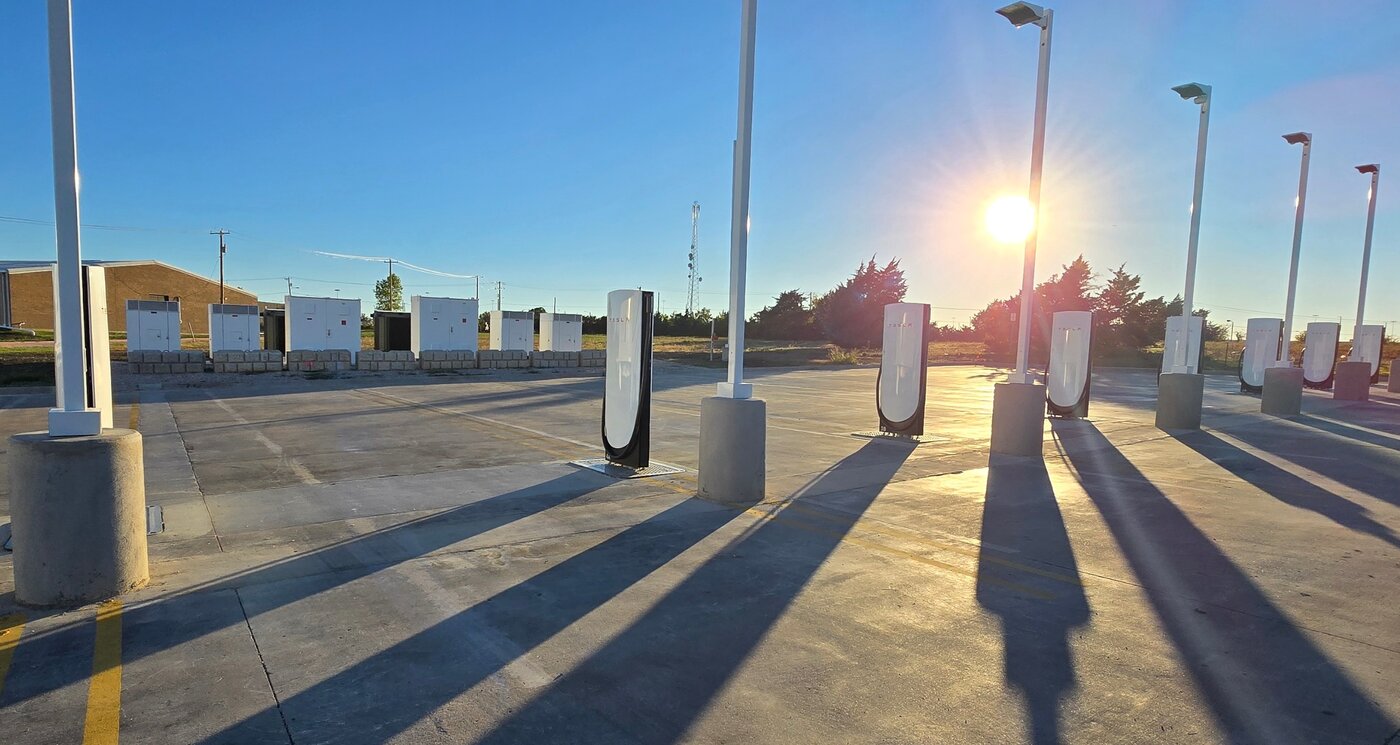
Tesla's official charging account posted on X this week that it had switched on a new Semi Megacharger station in Mesquite, Texas, on the eastern side of Dallas: eight charging stalls rated up to 1.2 megawatts each, Tesla's first public truck charger in the state. It's a real site, and it's a genuine step in building out the charging network that Tesla's electric semi trucks need to run long routes without a depot charger at every stop.
The number behind that step is where it gets shakier. At its Q4 2025 earnings presentation, Tesla told shareholders it expected around 37 public Megacharger sites open by the end of 2026. With six weeks of the year left, the real total, tallied from Tesla's own public charging map by Electrek and independently by the trade outlet DigitalToday, is seven sites and 44 stalls: Bloomington and Vernon in California (6 stalls each), Tulare, California, at a Pilot/Flying J truck stop (4), Conley, Georgia (8), Ellabell, Georgia, also at a Pilot (6), Hodgkins, Illinois (6), and now Mesquite (8). That's less than a fifth of the stated goal.
It's not quite a broken promise, though. Back in February, Tesla's own map showed up to 66 planned Megacharger locations in total, a longer term build out that was never tied to a 2026 deadline. Comparing "37 sites this year" against "66 sites eventually" is comparing two different plans, and conflating them makes the shortfall look either better or worse than it is depending on which number gets quoted. Pilot, the truck stop chain hosting several of Tesla's sites, said in October that nine more were under construction, so the public count could move before New Year. Left out of the public tally, fairly, are fleet only Megachargers at Tesla's own Giga Nevada and Carson, California plants, plus two units a trucking operator runs at the Port of Long Beach: real chargers, but not ones an independent truck driver can pull up to.
Why it matters outside Tesla's own numbers: a long haul electric truck is only as useful as the charging network backing it. A diesel truck can refuel at almost any servo in the country; an electric Semi still needs a Megacharger, and right now there are seven places in the United States where one of those trucks can top up on a public road trip. Tesla's trucks are real and on real roads, but the infrastructure that would let an owner operator run one without building private charging first is clearly behind the schedule Tesla itself set out.
The bottom line: partly true. The shortfall against Tesla's own 37 site target for 2026 is real and the site by site numbers check out, but it's not a simple case of a promise broken outright: a separate, larger 66 site figure for the network's eventual size gets conflated with the one year goal, and a handful of sites under construction could still close some of the gap before the year ends.