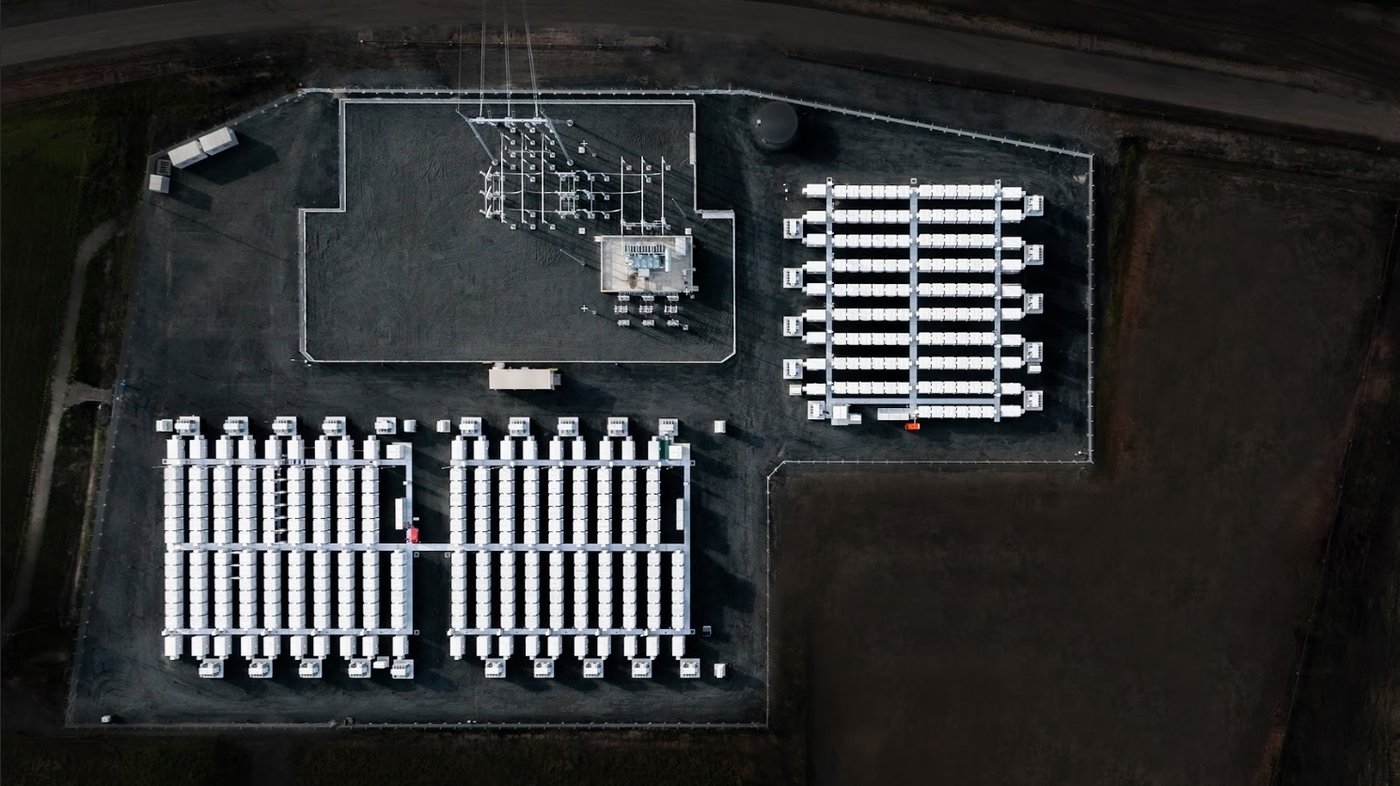
The claim going around is that a big new "grid-forming" battery has started construction at the old Hazelwood coal site in Victoria, and that it will be big enough to power 500,000 homes. The construction part is easy to check and real. The homes number is where it gets slippery, and it is the Victorian government's own number, not an outside exaggeration.
What's actually being built. Sungrow and ENGIE, together with EPC contractor Elecnor Australia, have started building Hazelwood 2, a 150 megawatt, 300 megawatt-hour battery energy storage system next to the existing 150MW/150MWh Hazelwood battery that ENGIE commissioned in 2023 on the site of the old Hazelwood coal-fired power station in the Latrobe Valley. Once both stages are finished, the site will have 300MW of combined power capacity and 450MWh of combined storage. The Victorian government confirmed the project on 16 October 2026 through a premier.vic.gov.au release, and Sungrow and ENGIE put out their own announcement on 27 October, with construction starting around then. Trade press including ESS News, pv magazine Australia and Evertiq covered it independently the same week, and all the capacity numbers line up.
The equipment is specific, not vague. Sungrow is supplying 66 of its ST5015-UX battery units (part of its PowerTitan 2.0 range), 33 SC6900UD-MV power conversion inverters, and its EMS3000 control system. Sungrow Australia managing director Thomas Hou calls it "an important step in advancing grid-forming energy storage in Australia." Grid-forming is a real and meaningfully different technology from the more common "grid-following" battery inverters: it can set its own voltage and frequency reference rather than just syncing to whatever the grid is already doing, which is part of why the Australian Energy Market Operator has been pushing for more of it as coal plants retire and take their spinning turbines with them. That part of the claim holds up independently of this one project.
Where it gets soft: the "500,000 homes" line. The government's release says the combined site will "power about 500,000 homes for up to 90 minutes." Run the numbers: 300MW for 90 minutes is 450MWh, which matches the combined storage figure, so the arithmetic behind the claim is internally consistent. But dividing 300MW across 500,000 homes works out to roughly 0.6 kilowatts per home, which is closer to a household's average continuous draw than to what homes actually pull during the high-demand evening peaks that a battery like this exists to cover, when many of those same homes can draw several kilowatts each running air conditioners, ovens and EV chargers at once. Neither the government release nor the company announcements explain which basis they used. It is a standard industry shorthand, not a Hazelwood-specific invention, but it overstates how far 300MW would actually stretch at the moment the grid most needs it.
The jobs and timeline numbers also check out as stated. The government puts construction jobs at up to 370 and targets commercial operation for 2028, matching the Sungrow release. The 370 figure and the broader "68,000 energy jobs" and "$18 billion in regional wages" figures quoted alongside it are program-wide claims about Victoria's entire Energy Jobs Plan, not specific to this one project, and the release doesn't separate them out clearly.
The bottom line: the battery, the builders, the equipment and the grid-forming technology are all real and independently confirmed. The "500,000 homes" figure is the one bit of spin, and it is coming from the government's own press release rather than from Sungrow or ENGIE, who stuck to megawatts and megawatt-hours in their own statements.