Several outlets have run with a blunt number this month: General Motors' electric vehicle sales have crashed 43 percent in 2026. It reads like the kind of round figure a headline writer reaches for when the real detail is messier. It isn't. The number holds up to the decimal place against Cox Automotive's own Kelley Blue Book Q3 2026 EV Sales Report, the industry's standard data source, but the full picture needs more than one number to make sense of it.
The top-line figure is accurate. Across Chevrolet, Cadillac and GMC, GM sold 82,152 EVs in the first nine months of 2026, down 43.2 percent from 144,668 in the same period of 2025. The quarter alone was worse: 25,473 EVs in Q3 2026, down 61.7 percent from 66,501 in Q3 2025. EVs made up just 3.8 percent of GM's US sales that quarter, against close to 10 percent a year earlier. Those are Cox Automotive's figures, not GM's own press release, and GM has not disputed them.
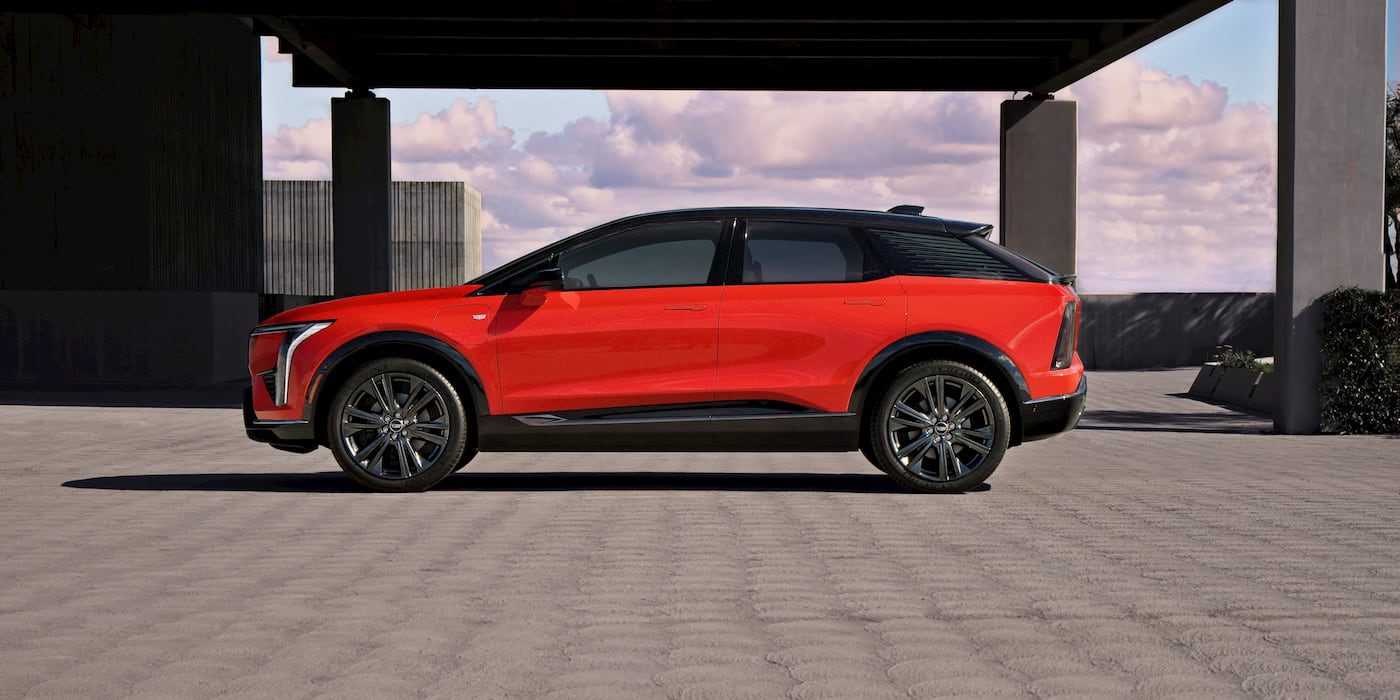
What the single number hides is that GM isn't one brand. Chevrolet's EV sales fell 56.0 percent year to date, with the Equinox EV down 92 percent in the September quarter alone. GMC fell 49.8 percent. Cadillac, by contrast, is down just 10.6 percent year to date, and its EVs, led by the Optiq pictured here, now make up nearly half of every electric GM vehicle sold. A reader who only sees "GM down 43%" would reasonably assume the pain is spread evenly. It isn't: Cadillac is holding up roughly five times better than Chevrolet.
The bigger piece of missing context is that this isn't really a GM story. The entire US EV market fell 30.3 percent year to date in the same Cox Automotive report, after the $7,500 federal EV tax credit expired in September 2025. Tesla, Rivian and some newer entrants grew or held share, but most legacy automakers' EV lines fell hard alongside GM's. Framing this as a GM-specific collapse, as some of the coverage does, overstates how much of it is a GM problem rather than an industry-wide one.
GM itself isn't retreating from EVs, despite the numbers. It has cancelled marketing spend on existing EV models and killed off the second-generation Bolt's relaunch, but it is also pressing ahead with a fourth-generation EV platform and a new battery chemistry, lithium manganese rich cells developed with LG Energy Solution, that GM says offers 33 percent more energy density than today's LFP cells at a similar cost. That density figure is GM and LG's own claim, not yet independently verified in production vehicles, and commercial cells aren't expected until 2028. GM vice chair Mark Reuss put the strategy this way: the company isn't walking away from EVs, but is waiting for US demand to return before scaling up again.
The bottom line: the 43 percent crash is real and comes straight from the industry's own sales tracker. Calling it misleading would go too far. But reported without the tax credit context or the brand-by-brand split, it leaves the impression of a GM-only failure when the honest picture is a GM that is unevenly exposed to an industry-wide downturn, and still betting on a comeback.