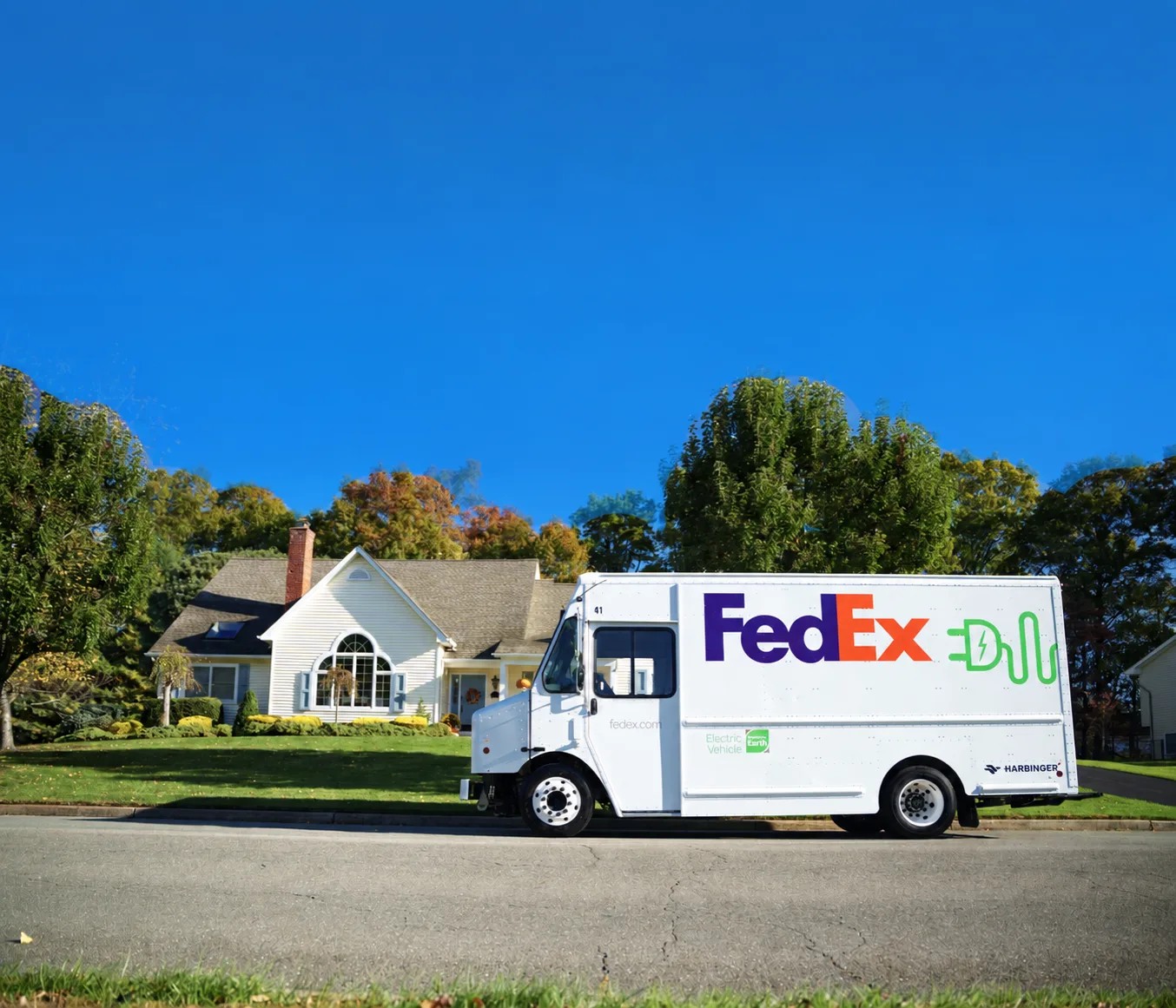
The claim going around freight and EV circles is that FedEx has locked in 2,000 electric delivery trucks from a six-year-old startup, in a deal worth more than $300 million. For a vehicle company most people have never heard of, that sounds like it could be a case of a press release outrunning the facts. It mostly isn't. The order itself is confirmed the same way across Harbinger's own newsroom, Bloomberg (which broke it), TechCrunch, FreightWaves and ESG Today.
What's actually been ordered. Harbinger Motors has a binding commitment from FedEx for 2,000 all-electric medium-duty trucks, worth over $300 million, to be built and delivered by the end of 2027. They'll go into FedEx's pickup-and-delivery operations across the US and Canada, replacing conventional vans one for one, with Kaizen Automotive Group handling the Canadian rollout. Not a single truck has actually been handed over yet under this order: it's a signed commitment, not a delivery record. FedEx is also an investor in Harbinger, having co-led its $160 million Series C round, which is worth knowing when reading FedEx executives praising the product.
The dollar figure and truck count hold up. $300 million-plus for 2,000 trucks works out to roughly $150,000 per vehicle, which is a plausible price for a medium-duty electric step van once chassis, battery and fit-out are included, and it's consistent across every outlet that's covered the deal. Harbinger's claim that this is "one of the largest binding orders" for electric medium or heavy-duty trucks is harder to check: the company is privately held and doesn't publish an order backlog, and there's no independent registry of truck orders to rank it against. It's a plausible claim, not a verified one.
The savings numbers are where this gets shaky. Harbinger says the deal will save FedEx about $20,000 per truck per year versus the diesel vans it replaces, roughly $40 million a year across the fleet, and about $800 million over a typical 20-year service life, plus more than 1.7 million tons of avoided CO2. None of that comes with the numbers shown: no stated diesel price, no duty cycle, no maintenance comparison, no breakdown of how much of the "fuel savings" is actually electricity cost versus reduced servicing. $20,000 a year in fuel savings alone is a large figure for a delivery van, and without the assumptions behind it, there's no way to check whether Harbinger is comparing like with like.
The bottom line: FedEx really has placed this order, the dollar figure and delivery timeline match across independent reporting, and the trucks are a genuine product, not vapourware. What hasn't been shown is the arithmetic behind the savings and emissions claims, which are Harbinger's own estimates, from a company that counts FedEx as both its customer and one of its investors.