The claim going around this week is that one of Australia's "big three" energy retailers has been fined three quarters of a million dollars because its grid batteries couldn't do the job they were paid to do. That's a serious claim against technology Voltage Check writes about most days, so it's worth checking carefully. It holds up: two independent Australian energy trade outlets, Renew Economy and Energy Source & Distribution, both report the same figures citing the Australian Energy Regulator (AER) directly, and the regulator's own deputy chair is quoted making the point in plain terms.
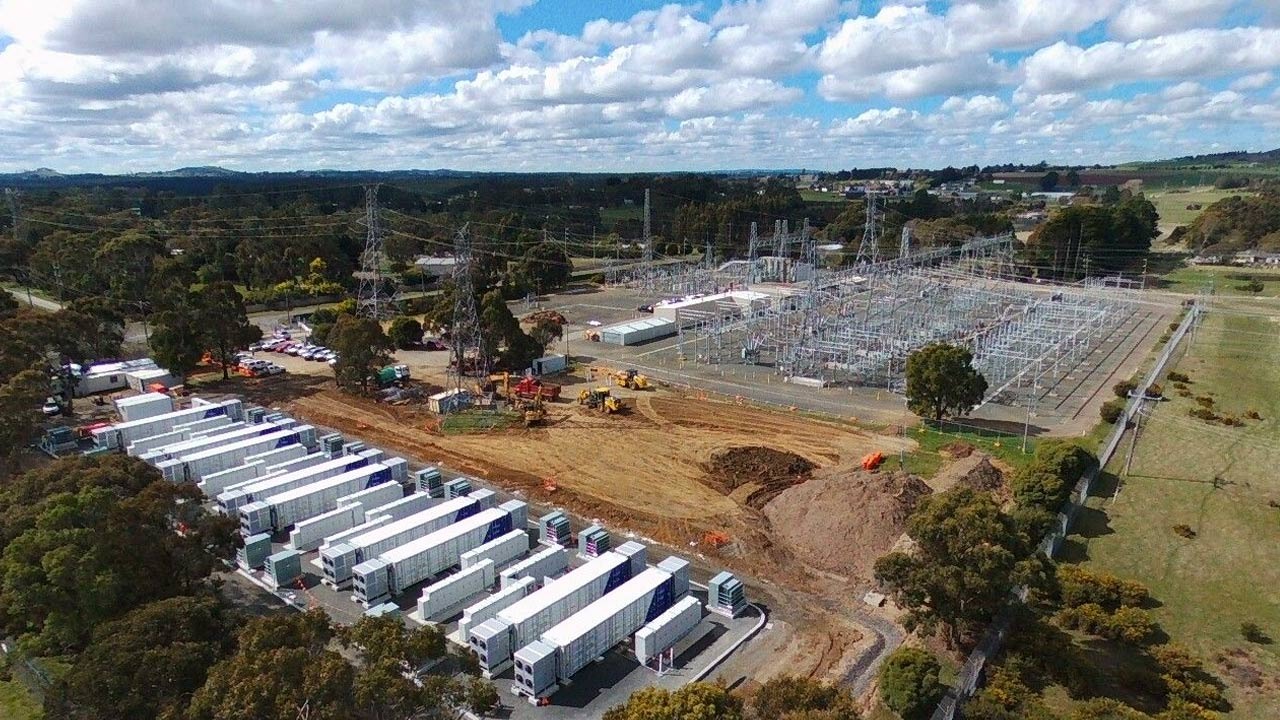
What actually happened. The AER has issued EnergyAustralia 10 infringement notices totalling $750,000 over breaches allegedly committed across 2023 and 2024. The regulator says the company failed to ensure that four batteries it manages in New South Wales and Victoria could deliver the frequency control ancillary services (FCAS) they had offered into the market, and failed to make sure those batteries complied with the Australian Energy Market Operator's (AEMO) dispatch instructions when called on. An EnergyAustralia spokesperson confirmed the four sites as the Ballarat, Gannawarra, Darlington Point and Riverina battery storage systems, assets the company manages and trades under long term agreements rather than necessarily owns outright.
FCAS is the service that keeps the grid from tripping over itself. It's the second by second balancing act that keeps the electricity system's frequency steady, and batteries, gas plants and coal units all get paid to sit ready to provide it. When a provider is paid for capacity it can't actually deliver, the safety margin AEMO is relying on during a real emergency is smaller than it looks on paper. That's exactly the scenario here: the alleged failures came to light after AEMO asked market participants for frequency control data following the severe Victorian storms of 13 February 2024, which knocked out roughly 12,000km of distribution lines, collapsed six transmission towers and cut power to more than a million customers at the peak.
The context that stops this being a bigger story than it is. EnergyAustralia self reported the issue to the AER, AEMO and the Essential Services Commission, has repaid AEMO the money it was paid for the shortfall in service, and the regulator says it took the company's cooperation and corrective work into account when settling on the penalty. Infringement notices are not a court finding of wrongdoing, and the AER itself frames this as routine compliance enforcement: it's the fourth FCAS related penalty it has handed down since 2019, and coal generators have copped considerably bigger ones, AGL paid $6 million in 2023 over FCAS failures stretching back to 2018. AER deputy chair Justin Oliver put it simply: "as batteries take on a greater role in the electricity system, operators must understand their operating limits," and providers "must be ready and able to deliver these services... or face enforcement action." Four underperforming sites, caught, reported and fixed, isn't evidence that grid scale batteries as a technology are unreliable: Australia now has dozens of them doing this job without incident.
The bottom line: the fine, the amount, the four named sites and the storm linked discovery all check out the same way across independent reporting that cites the AER on the record. This one is Verified.