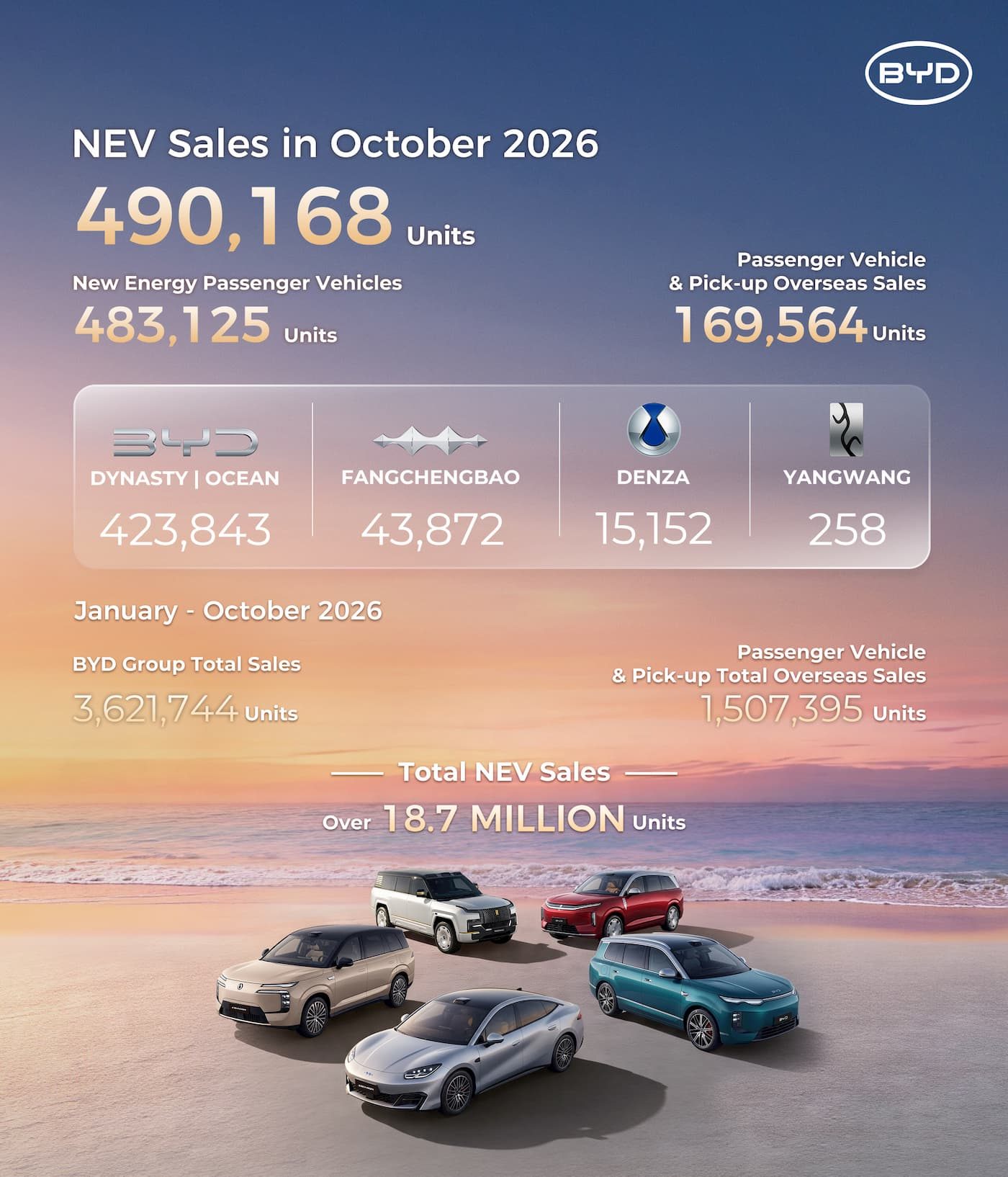
The line doing the rounds this week is that BYD sold more EVs in a single month than the entire United States managed in three. It's the kind of comparison built to sound bigger than it is, so it's worth checking both halves separately: BYD's own October number, and the US quarter it's being measured against.
BYD's number is real and independently confirmed. BYD posted 305,743 battery-electric vehicle sales in October 2026, a record for the company and the first time it has crossed 300,000 BEVs in a single month, up 37.4 percent on October last year. That figure comes from BYD's own monthly sales filing, posted on its official account, and it matches independent reporting from CnEVPost and Electrek line for line. Total new energy vehicle sales (BEVs plus plug-in hybrids) came to 490,168, up 11 percent year on year, while plug-in hybrid sales actually fell 17.2 percent to 177,382. Exports were 170,194, more than double last October.
The US figure checks out too. Cox Automotive's Kelley Blue Book estimate puts US new EV sales at 262,649 for the whole of the third quarter of 2026, July through September. So yes, on raw battery-electric numbers, BYD's one month (305,743) beats America's three months (262,649). If anything, stacking a month against a quarter undersells BYD's lead rather than inflating it.
What the comparison glosses over is that this isn't BYD beating American car makers on their own turf. BYD does not sell passenger vehicles in the United States. Tariffs on Chinese-made electric vehicles, layered on by both the Biden and Trump administrations, now sit at well over 100 percent, and no BYD passenger car is currently available for sale to US buyers. So the 305,743 figure is almost entirely sales in China, plus exports to Europe, Latin America, Southeast Asia and elsewhere, none of it competing against the Teslas, Chevrolets and Fords that make up that US quarterly figure. The honest version of the comparison isn't "BYD beat America," it's "one Chinese car maker now sells more electric vehicles in a month, worldwide, than the entire US market does in a quarter," which is still a genuinely large gap, just not the head-to-head contest the framing implies.
The bottom line: both numbers in the comparison are accurate and independently sourced. The shaky part is what the comparison invites you to assume, that BYD is winning a contest against the US car industry it isn't actually allowed to enter.