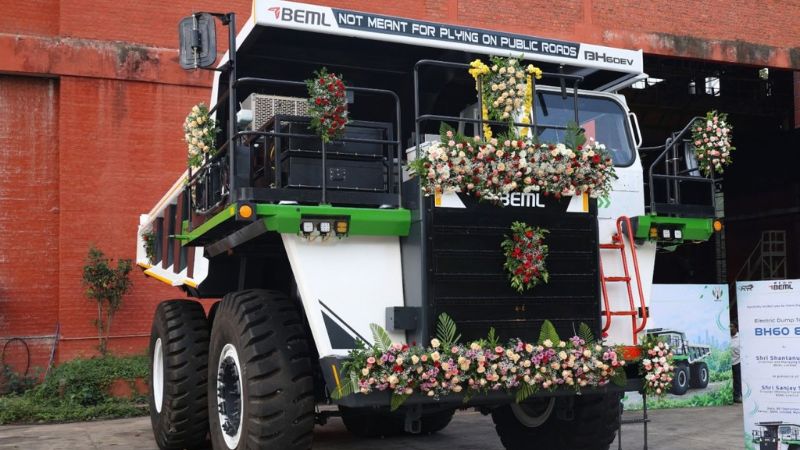
BEML, the Indian state-owned heavy equipment maker, unveiled a new battery-electric mining dump truck at its Mysuru Complex in late September, calling it "India's first indigenously designed and developed" truck of its class. Coverage ran across most of India's business and trade press within days, all repeating the same figures.
What's real: the truck itself checks out. It carries a genuine 1,000kWh lithium-ion battery pack, a 36.4 cubic metre rock body, and a rated payload around 54.5 tonnes (the "60-tonne" in its name and headlines refers to its gross weight class, not its payload, a distinction most of the coverage glossed over). BEML's chairman, Shantanu Roy, was on record at the launch. The truck is a genuine, substantial piece of engineering.
What's not shown working: the headline figures everyone's repeating, "40-60% lower operating costs" and "around 130 tonnes of CO2 saved", appear in every article, word for word, sourced back to BEML alone. No outlet, and no BEML material we could find, discloses what diesel truck it's being compared against, what duty cycle, what fuel price, or what grid electricity mix the CO2 number assumes. We couldn't even locate an official BEML press release specifically for this truck; every source traces back to the same unreferenced vendor claim. BEML has also made a near-identical "India's first" claim for a different, 35-tonne electric truck back in April, worth knowing before taking any "first" claim at face value.
The bottom line: a real, serious electric mining truck exists and that's genuinely worth noting, heavy industry electrification isn't just a developed-world story. But "40-60% cheaper" and "130 tonnes of CO2 saved" are marketing numbers repeated uncritically by the press, not independently verified figures. Treat the truck as real and the savings claims as unproven until BEML shows its working.