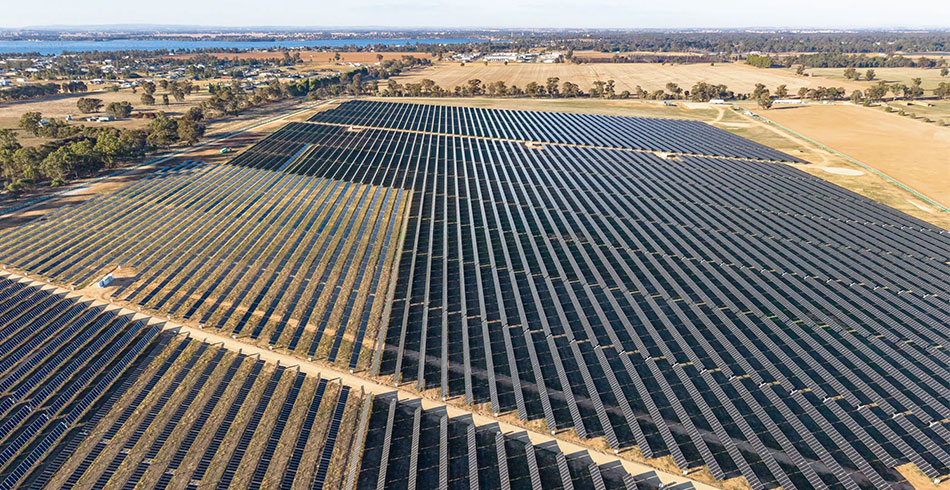
European Energy confirmed on 5 November that its Mulwala solar farm, about 2km north of the Riverina town of the same name, had finished testing and was running at full output. The project is real, it's finished, and the headline numbers hold up: more than 50,000 panels, almost 7,000 piles, over 40,000 working hours and more than 250 local jobs during a construction run that started in September 2025 and wrapped up in March 2026. European Energy expects the 31MW farm to generate around 66 gigawatt-hours a year, which lines up with the capacity factor you'd expect from a solar farm in that part of NSW, so there's no inflated generation figure to pick apart here.
The part worth slowing down on is what the deal actually buys data centre operator AirTrunk. Under the offtake agreement, "the majority" of Mulwala's electricity is contracted to AirTrunk, with the rest sold uncontracted into the grid. Neither company has published the percentage, the price or the length of that contract. That's a normal commercial choice, but it means nobody outside the two companies can check how big AirTrunk's actual slice really is.
More importantly, this isn't a dedicated power line running from a solar farm to a server room. Mulwala's electricity goes into the shared National Electricity Market like every other generator's does, and AirTrunk's data centres draw their power from the same grid like every other customer does. What the contract buys AirTrunk is the right to count that renewable generation against its own electricity use on paper, a standard and legitimate accounting method in the industry, but a long way from "this data centre runs on solar." AirTrunk's own figures make that gap clear: the company says it matched about 73 percent of its electricity use with renewables across its whole portfolio in FY26, and is aiming for 100 percent by 2030, not there yet.
AirTrunk has also flagged a much bigger deal in the Hunter Valley, a proposed 260MW solar farm plus an 800-plus MWh battery and up to 350MW of wind, meant to help power its planned Kurri Kurri site from 2030. That one is still at the "exclusivity agreement to progress discussions" stage, with the companies explicitly saying terms, approvals and a potential power purchase agreement are all still to be worked out. It's a plan, not yet a project, and it's years from generating a single electron.
The verdict: the Mulwala solar farm itself checks out fully, it's built, it's operating, and the generation figures are believable. Where the story gets oversold is in the leap from "AirTrunk has a solar offtake deal" to "AirTrunk's data centres run on solar," which skips over a shared grid, an undisclosed contract share and a company-wide renewables tally that's still a quarter short of its own target.