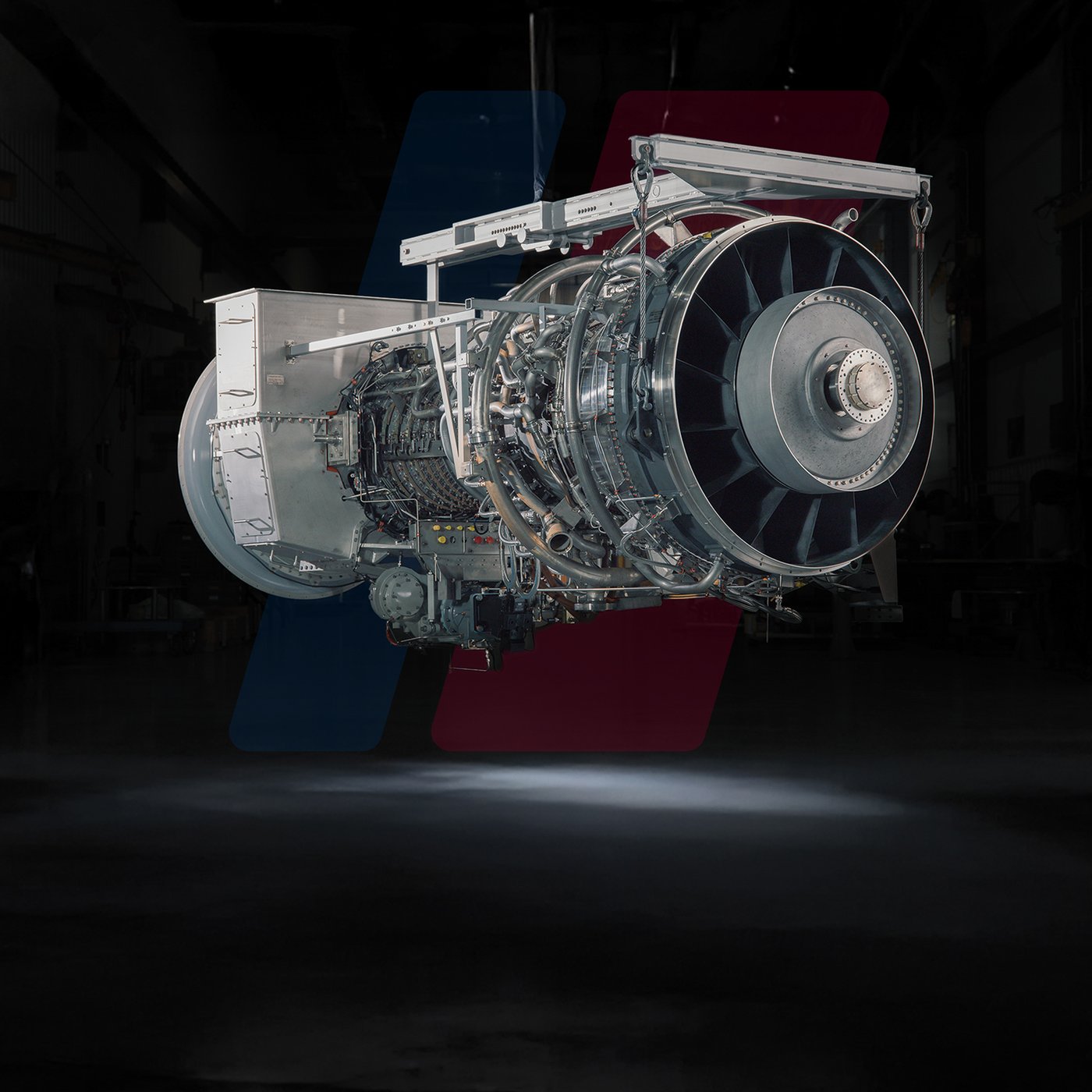
The claim spreading around tech and energy circles is that AI data centres, unable to get a spot in the queue for new power, are buying up "retired jet engines" and bolting them onto trailers to keep the lights (and the chips) on. It's a great image. It's also only partly how this actually works.
What's real: there's a genuine turbine shortage. Orders for new industrial gas turbines have outstripped what manufacturers can build. Reporting citing analysts at Wood Mackenzie puts the average wait for a new large turbine at around six years, with some orders now being discussed for delivery in 2030 or 2031. Global turbine orders are running above 100 gigawatts a year against something closer to 60 to 70 gigawatts of annual manufacturing capacity, according to figures attributed to Siemens Energy, GE Vernova and Mitsubishi Heavy Industries. That backlog is the reason AI data centre builders are looking for a faster way to get power onto their own site rather than wait for a grid connection or a new turbine order to clear.
What they're actually buying isn't "used jet engines" in the literal sense. One of the companies named in this story, AI infrastructure firm Crusoe, ordered 13 PE6000 generator units from US manufacturer ProEnergy in April, rated at 50 megawatts each for 650 megawatts total, destined for its hyperscale data centre sites. ProEnergy's own PE6000 is built around a remanufactured CF6-80C2 engine core, the same core family that has powered wide-body aircraft like the 767 and A300. But "remanufactured core" is doing real work in that sentence: ProEnergy overhauls and rebuilds these cores into purpose-built industrial generator sets at its own factory in Sedalia, Missouri, they aren't pulled straight out of a plane that was flying passengers last year. Reporting on the Crusoe deal has specifically noted that its units are not retired aircraft engines.
The secondhand market for this gear is real, though, and it's priced accordingly. Brokers quoted in reporting on the trend put used aeroderivative turbine capacity at around $1.5 to $1.7 million per megawatt, against $2 million to $2.5 million per megawatt for new equipment, with one cited example of a 29-megawatt used unit selling for about $12.5 million versus roughly $35 million and a five-year wait for new gear. "That secondary market is very, very hot right now," EthosEnergy chief executive Ana Amicarella is quoted as saying. That's a believable number given how badly the industry wants anything that can be delivered in months rather than years, whether it started life spinning a jet or not.
Scale check: this is still a small slice of total data centre power. Tracking firm Cleanview's estimate, cited in reporting from mid-2026, puts proposed on-site generation at US data centres at around 90 gigawatts, with only about 2 gigawatts of it actually operating so far. Most of that gap is still waiting on equipment, permits and emissions approvals, including nitrogen oxide controls these units need to run legally. The "jet engines everywhere" framing makes for a punchier headline than "a handful of data centre operators have ordered several hundred megawatts of remanufactured aeroderivative turbines," but the second one is closer to what's actually happening on the ground.
The bottom line: the turbine shortage is real, the six-year wait for new equipment is real, and companies like Crusoe really are buying aeroderivative generator sets with jet-engine-derived cores to get power faster. What doesn't hold up is the literal picture of scavenged airliner engines in trailers: the units actually being sold are factory-remanufactured industrial equipment, and the companies buying them have specifically pushed back on the "retired aircraft engine" framing.